
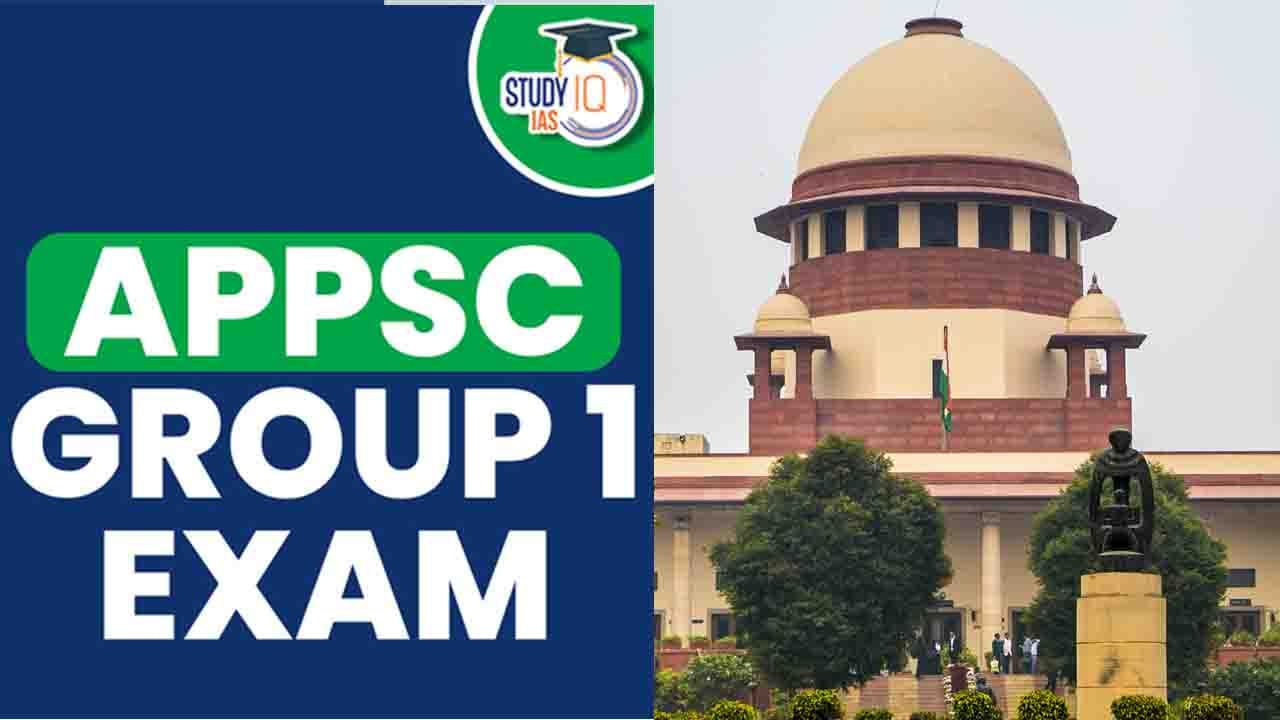
Amaravati: The APPSC Group 1 Officers Supreme Court case has taken a significant turn as the Supreme Court refused to grant relief to Group-1 officers selected through the Andhra Pradesh Public Service Commission (APPSC) in 2018. The apex court upheld the Andhra Pradesh High Court Division Bench orders directing the state government to remove these officers from key focal posts and reassign them to non-focal posts.
The Supreme Court made it clear that government officers cannot insist on priority postings and observed that they would receive salaries irrespective of their posting location. The court questioned the officers’ arguments and indicated that the High Court’s orders were legally valid.
https://goodmorningandhraonline.com/andhra-pradesh-high-court-group-i-officers-transfer/
This development has created uncertainty among the officers, as the case remains under judicial scrutiny and their future postings and appointments could be affected depending on further legal proceedings.
The issue dates back to the APPSC Group-1 recruitment process conducted in 2018, which later became controversial due to allegations of irregularities in paper evaluation and interview procedures. Several candidates approached the High Court challenging the recruitment process.
https://goodmorningandhraonline.com/administrative-system-clean-up-ap/
Earlier, a single judge of the Andhra Pradesh High Court cancelled the entire recruitment, citing irregularities. However, the Division Bench later provided interim relief and allowed certain administrative arrangements while continuing hearings.
High Court orders and government action
The APPSC Group 1 Officers Supreme Court matter gained further attention when the Andhra Pradesh High Court Division Bench directed the state government to remove the officers from focal posts such as Revenue Divisional Officers (RDOs), Deputy Superintendents of Police (DSPs), and Municipal Commissioners.
The High Court ordered that the officers be reassigned to non-focal posts within a specific timeframe. However, when the government delayed implementing the court’s orders, the court expressed serious displeasure and summoned the Chief Secretary for personal appearance.
The court warned of strict action for failure to implement its orders, following which the government immediately complied and transferred the officers as directed.
These developments highlighted the seriousness of the issue and the judiciary’s firm stand on enforcing its orders.
Future uncertainty continues
The APPSC Group 1 Officers Supreme Court decision has further strengthened the High Court’s position and reduced the chances of immediate relief for the officers.
The recruitment process, conducted during the previous government, had already come under criticism due to allegations of irregularities. However, many officers continued in service and were assigned important administrative roles.
After the change in government, there were political statements about cancelling the recruitment process. However, the appointments were not cancelled, and the officers continued to work in various government departments.
Now, with the Supreme Court refusing to interfere with the High Court’s orders, uncertainty remains over the final outcome of the case.
Legal experts believe the final verdict will be crucial in determining the validity of the recruitment process and the future of the officers.
The case has also raised broader concerns about transparency, fairness, and accountability in public service recruitment.
Ensuring fair recruitment practices is essential to maintain public trust and protect the interests of deserving candidates.
The final outcome of the APPSC Group 1 Officers Supreme Court case is expected to have significant administrative and legal implications in Andhra Pradesh.
The APPSC Group 1 Officers Supreme Court issue has also drawn attention from job aspirants and administrative circles across Andhra Pradesh. Many candidates who appeared for the examination are closely following the case, hoping for clarity and justice. Recruitment through public service commissions carries great responsibility, as it determines future administrators. Any legal dispute creates uncertainty not only for selected officers but also for thousands of aspirants who trust the system and prepare for years to secure government jobs.