
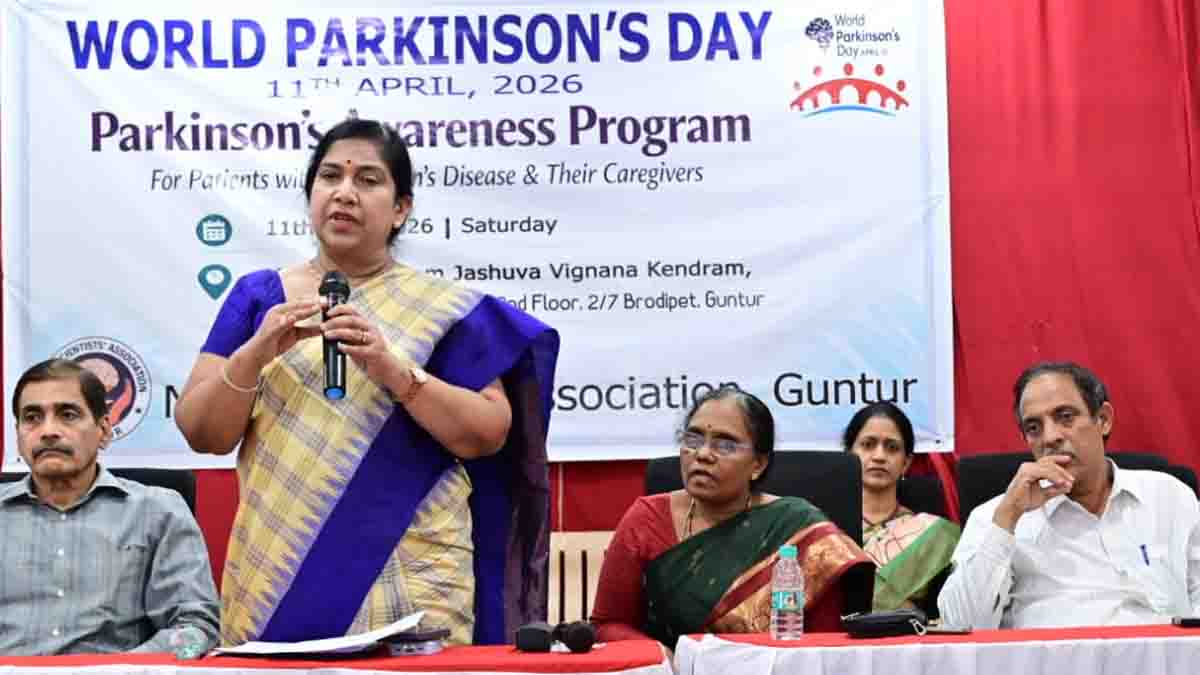
The issue of Rising Neurological Disorders is becoming a serious public health concern across India, warned Dr. P. Vijaya, President of the Neuro Scientists Association of India. She highlighted the increasing burden of neurological conditions during an awareness programme held in Guntur on the occasion of World Parkinson’s Day.
Aslo read https://goodmorningandhraonline.com/awake-bypass-surgery-on-cancer-patient/
Rising Neurological Disorders Linked to Aging and Lifestyle Changes
Addressing the gathering at Joshua Vignana Kendram in Brodipet, Guntur, Dr. Vijaya emphasized that Rising Neurological Disorders are largely driven by aging populations and rapid lifestyle changes. She noted that people above the age of 60 are particularly vulnerable to neurological conditions, making early diagnosis and timely treatment crucial.
The awareness programme, organized under the Neuro Association, saw active participation from neurosurgeons who interacted with the public and clarified doubts related to neurological health. Experts explained that lack of physical activity, stress, and unhealthy habits are contributing significantly to the rise in such disorders.
Also read https://www.mayoclinic.org/diseases-conditions/parkinsons-disease/symptoms-causes/syc-20376055
Rising Neurological Disorders Include Parkinson’s Disease and Require Early Care
Doctors at the event discussed Parkinson’s Disease as one of the major contributors to Rising Neurological Disorders. They explained that the disease occurs due to damage to nerve cells in the brain, resulting in decreased dopamine levels.
Common symptoms include tremors in hands and legs, slow body movements, stiffness, and coordination difficulties. Although Parkinson’s is more common among elderly individuals, doctors warned that in rare cases, it can also affect younger people and children.
Also read https://goodmorningandhraonline.com/108-ambulance-heart-attack-patients-ap/
Specialists including Dr. Taraknath, Dr. Shiva Ramakrishna, Dr. Veeramma, Dr. Srinivasa Rao, and Dr. Haritha stressed that while Parkinson’s disease has no complete cure, it can be effectively managed with proper medication and lifestyle adjustments. Advanced treatments like Deep Brain Stimulation (DBS) were also highlighted as beneficial for patients who do not respond to medicines.
The programme witnessed participation from Public Health Forum leaders, senior citizens, and students, creating awareness about the importance of neurological health and early medical intervention.