

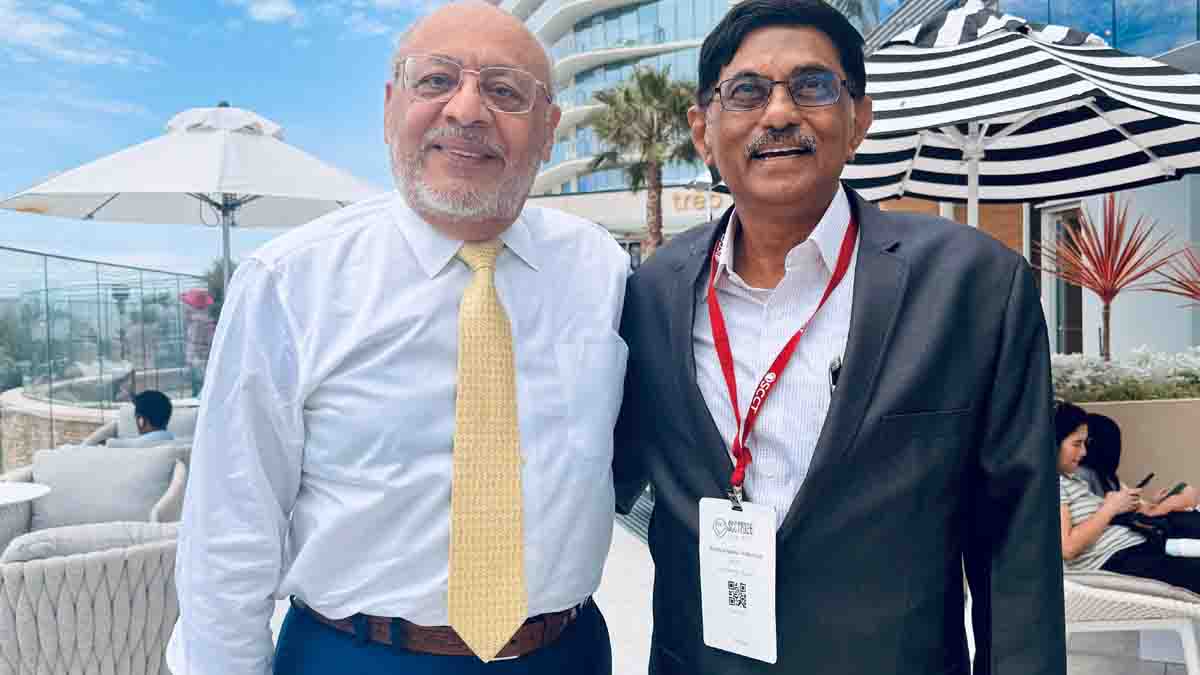
Vijayawada, July 17: Aster Ramesh Hospitals SCCT 2026 research has earned global recognition after its pioneering cardiovascular study was presented at the International Society of Cardiovascular Computed Tomography (SCCT) 2026 Scientific Sessions in San Diego, California. The research is the first from India to compare Artificial Intelligence (AI)-based CT Fractional Flow Reserve (CT-FFR) with Optical Coherence Tomography (OCT), marking a significant milestone in preventive cardiac care.
The study was presented by Dr. Pothineni Ramesh Babu, Chief Interventional Cardiologist, and Dr. Ram Manohar, Interventional Cardiologist, before an international audience of leading cardiologists and cardiovascular scientists during the conference held from July 9 to 12.
The research is part of an ambitious preventive cardiology programme spanning the Coastal Health Corridor, covering Krishna, West Godavari, Guntur, and Prakasam districts. Led by Dr. Pothineni Ramesh Babu, the project brings together 30 cardiologists and 20 research assistants, working in four dedicated research teams alongside international collaborators.
Also read https://goodmorningandhraonline.com/dr-pamidimukkala-vijay-wso-board/
Aster Ramesh Hospitals SCCT 2026 Study Uses AI to Detect Heart Disease
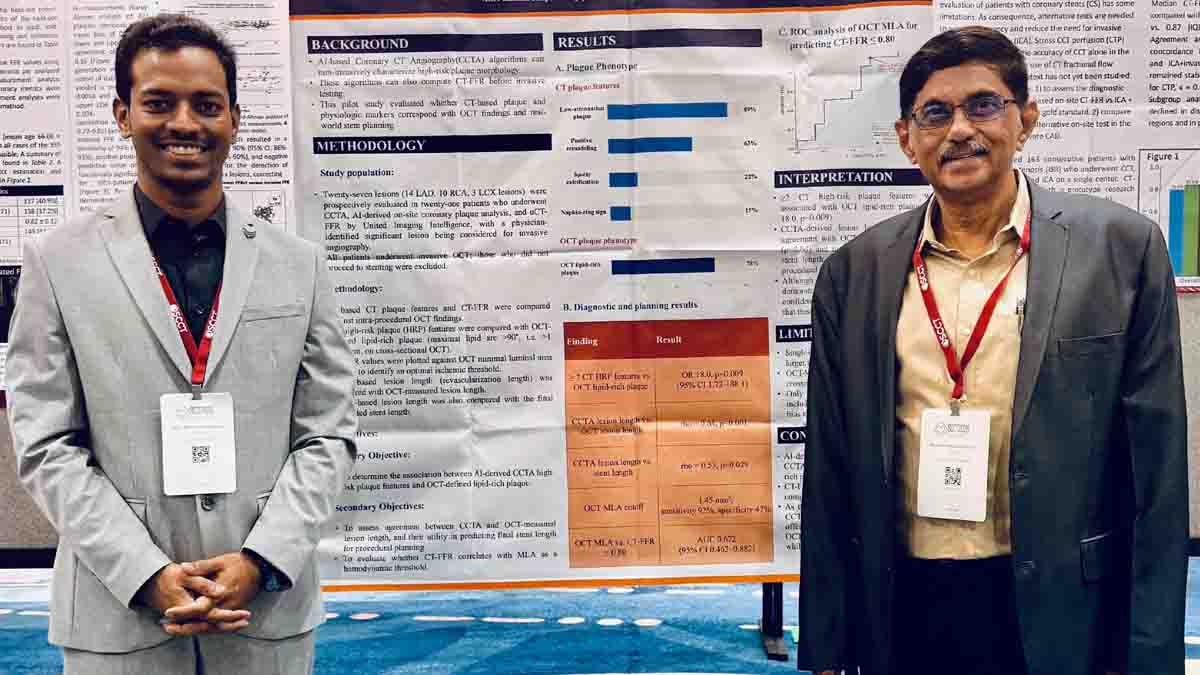
The pilot study demonstrated that AI-powered CT Coronary Angiography (CTCA) can accurately identify high-risk coronary plaques before treatment. As a result, cardiologists can better plan whether patients need medication, stents, or bypass surgery.
Moreover, researchers found a strong correlation between AI-generated CTCA findings and invasive Optical Coherence Tomography (OCT) images. Therefore, AI-assisted CT scans could become a reliable, painless, and non-invasive alternative for the early detection of coronary artery disease.
Also read https://goodmorningandhraonline.com/ap-health-department-transfers-2026/
Aster Ramesh Hospitals SCCT 2026 Research Built on 30,000 CT Scans
One of the study’s biggest strengths is its database of more than 30,000 CT coronary angiograms, collected over the past 15 years. Researchers are using this extensive dataset to understand why premature heart attacks occur so frequently among South Indians.
The team is investigating why some patients suffer heart attacks despite having only 30% arterial plaque, while others remain stable even with 80% blockage. By analysing plaque characteristics with AI, researchers hope to predict future cardiac events much earlier.
For the first time in India, the project combines CT-FFR, CT Plaque Morphology Analysis, and AI-driven Digital Twin Analysis to build advanced heart attack prediction models.
Also read https://scct.org/news/726127/Congratulations-2026-SCCT-Award-recipients.htm
Aster Ramesh Hospitals SCCT 2026 Receives Global Appreciation
During the conference, the research team met Professor Dr. Jagat Narula, President of the World Heart Federation, to discuss the growing burden of premature heart disease in India.
Dr. Narula praised the hospital’s 30,000-plus CT coronary angiogram database, calling it an invaluable resource for global cardiovascular research. He also highlighted the need to investigate why many Indians experience heart attacks despite having a zero calcium score and no traditional risk factors such as diabetes or hypertension.
Furthermore, he assured the team of international scientific collaboration and research support.
AI Research May Transform Future Cardiac Care
According to project leaders Dr. Pothineni Ramesh Babu, Dr. Raja Ramesh, Dr. Anoop, and Dr. Ram Manohar, the AI-driven research could significantly reduce the need for conventional catheter angiography.
Instead, doctors may rely on highly accurate, non-invasive imaging to make personalised decisions about medication, stenting, or bypass surgery. Ultimately, the researchers believe the project will improve early diagnosis, reduce treatment delays, and save more lives.
FAQs
1. Why is the Aster Ramesh Hospitals SCCT 2026 research important?
It is India’s first study comparing AI-based CT-FFR with OCT, helping improve early and non-invasive detection of coronary artery disease.
2. What makes this heart research unique?
The study is supported by a database of more than 30,000 CT coronary angiograms and uses advanced AI technologies to predict heart attack risk.
3. How can this research benefit patients?
The findings could reduce the need for invasive catheter angiography while helping doctors make faster and more accurate treatment decisions using AI-assisted CT scans.