

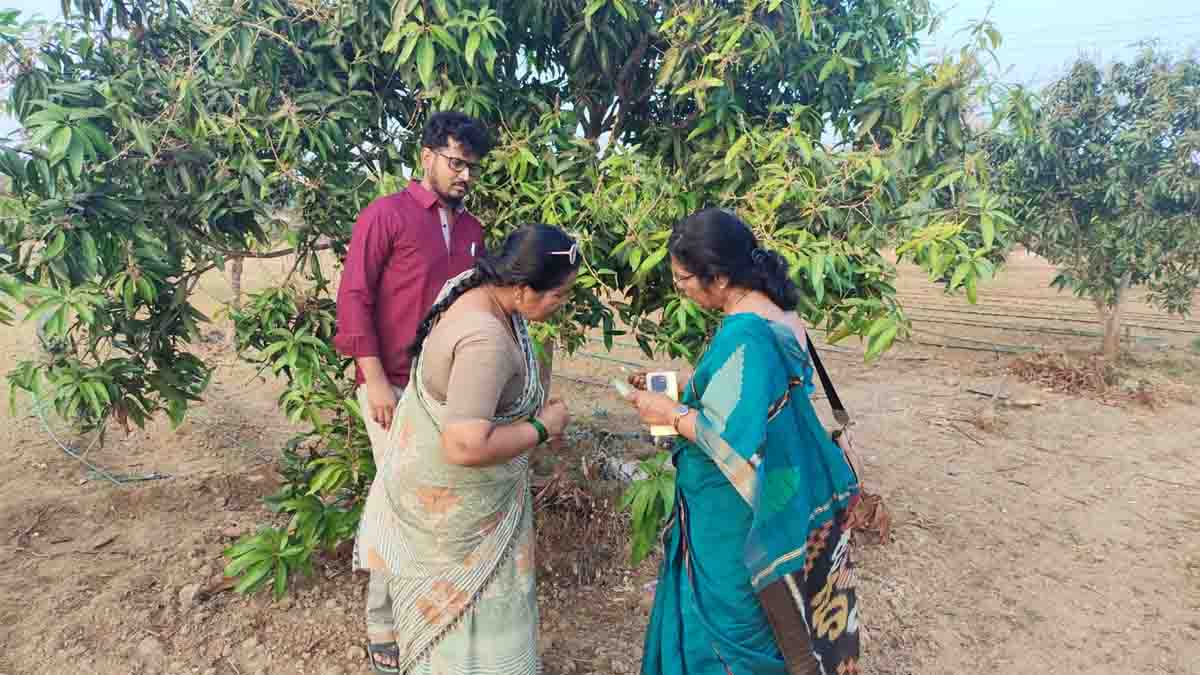
Kalikiri, March 13: Agricultural scientists have advised farmers to protect crops from high temperatures as the Indian Meteorological Department (IMD) has forecast above-normal temperatures across many parts of the country from March to May 2026.
In Andhra Pradesh, districts including Annamayya, Kurnool, Kadapa, Anantapur, Nellore, Chittoor, Tirupati, Prakasam, Markapuram, and Srikakulam are likely to experience rising temperatures during March.
In this context, KVK (Krishi Vigyan Kendra) Coordinator Dr. K. Manjula and agricultural scientists suggested several measures to help farmers protect crops from high temperatures and minimize damage during heatwave conditions.
https://icar.org.in/en/node/6342
Precautionary Measures for Farmers
Farmers were advised to irrigate crops during the early morning or evening hours to reduce water loss due to evaporation. Maintaining adequate soil moisture in fields is essential, and irrigation through sprinklers or rain pipes is considered beneficial during extreme heat.
Spreading grass or crop residues in fields helps retain moisture and reduces evaporation. The use of organic fertilizers such as farmyard manure and vermicompost improves soil water-holding capacity and provides essential nutrients to plants.
Farmers should remove the Parthenium weed (Congress grass) from fields and burn the uprooted plants to prevent its spread.
Agricultural experts warned that sap-sucking pests such as aphids, thrips, whiteflies, mites, and leafhoppers may increase during hot weather. To control them, farmers can spray neem twig extract or neem oil (10,000 ppm) at 1 ml per litre of water once every 20 days. Installing yellow and blue sticky traps (20–30 per acre) can also help control these pests.
https://goodmorningandhraonline.com/polyecet-2026-free-coaching-government-polytechnic-proddatur/
In paddy cultivation, applying Azolla at 8–10 kg per acre helps supply nitrogen and reduces water requirements.
To strengthen crops against heat stress, farmers were advised to spray Potassium Nitrate (13:0:45) or 19:19:19 fertilizer at 5 grams per litre of water once.
In orchard crops such as mango, covering developing fruits with protective fruit covers helps reduce heat damage and maintain fruit quality. For crops like papaya, tomato, chilli, and flower gardens, bio-fungicides such as Trichoderma and Pseudomonas should be applied through drip irrigation or mixed with farmyard manure to prevent soil-borne root rot diseases.
Scientists also recommended using eco-friendly pesticides such as Spinosad and Spinetoram to control caterpillar pests that damage fruits and branches.