

Corruption Allegations Surface in State Endowments Department
Middlemen Allegedly Playing Key Role in Endowments Department Corruption
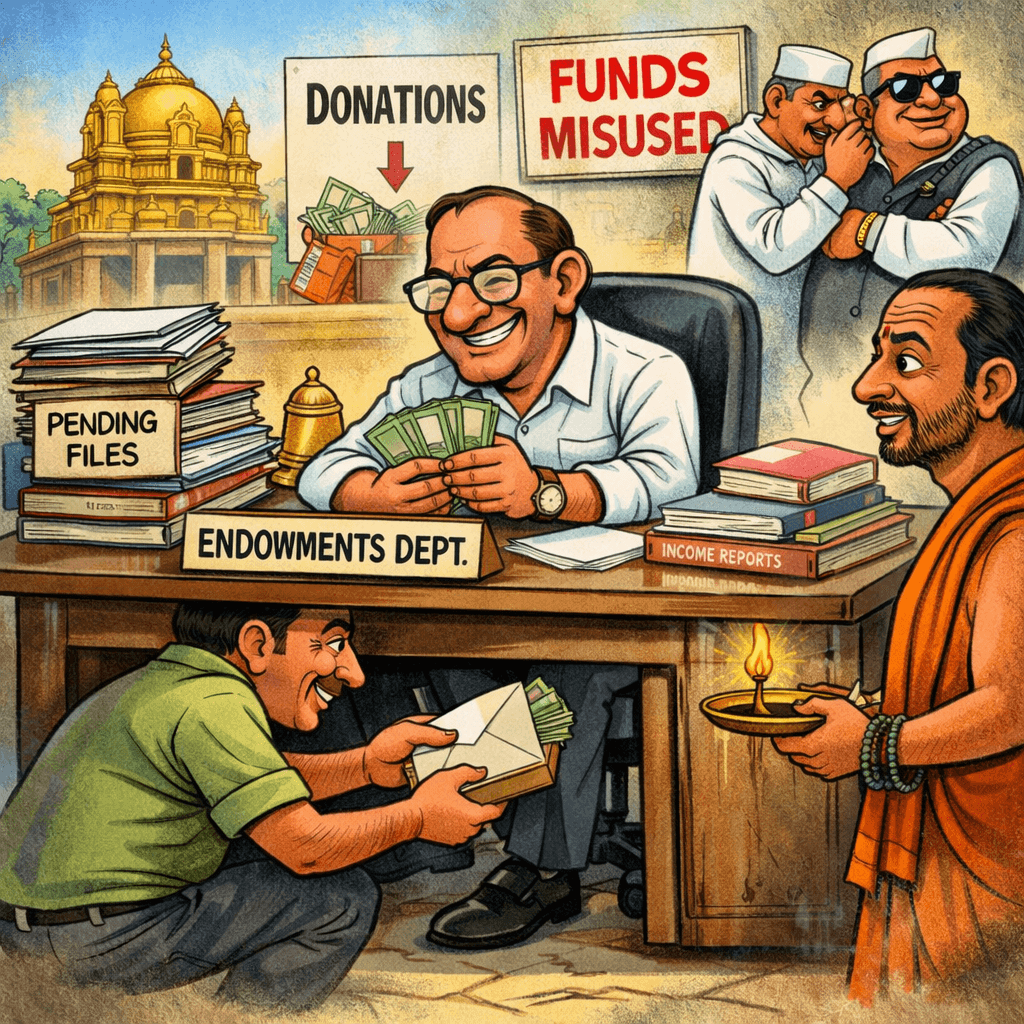
Endowments Department corruption allegations have surfaced, with claims of organised bribery and middlemen networks affecting file clearances. Organised bribery have emerged from the State Endowments Department, with claims that officials, intermediaries, and influential aides are part of an alleged network facilitating illegal collections in exchange for clearing files and granting approvals. According to multiple sources familiar with the department’s functioning, bribery has allegedly become deeply entrenched, with payments reportedly demanded at various levels for routine administrative work. Sources claim that without paying bribes, files are often delayed indefinitely or fail to move forward. Middlemen Allegedly Playing Key Role Insiders allege that certain lower-level officials are acting as intermediaries, collecting bribes from applicants and distributing the money to higher authorities.
https://www.tirumala.org/TTD%20Trust%20Board.aspx
These intermediaries are said to have established informal systems of collection, with specific “targets” allegedly assigned for generating illegal payments. “The system has become so normalised that applicants are indirectly informed about the expected payments even before their files are processed,” a source said on condition of anonymity. Officials in both the department’s headquarters and the State Secretariat are reportedly aware of these practices. While some sections of the Secretariat are said to maintain stricter procedures, the Endowments Department itself is facing serious criticism over its alleged lack of transparency. In-Charge Commissioner Appointment Raises Questions The controversy has intensified following the government’s decision not to appoint a full-time IAS officer as Commissioner of the Endowments Department. Instead, in-charge responsibilities were given to a senior officer from within the department. Sources allege that some officials are misusing the in-charge Commissioner’s name to influence decisions and collect bribes.
“Whether the officer is directly involved or not, his position is being used by others as a cover for illegal collections,” another source claimed. The department is currently headed administratively by a retired IAS officer serving in a senior leadership role. However, critics argue that the absence of a regular IAS Commissioner has weakened oversight and accountability. Allegations Extend to Minister’s Office Some sources have also raised concerns about the functioning of the Minister’s office, alleging that files are not cleared without informal payments. These claims, however, could not be independently verified. There are also allegations that certain aides and officials attached to the Minister’s office wield significant influence over departmental decisions.
Despite these allegations, no official inquiry has been announced so far. Honest Officers Face Challenges Amid the allegations, some officials have earned reputations for integrity. One senior official working in the Secretariat is widely regarded by colleagues as highly honest, with a service record spanning over three decades without any corruption complaints. However, such officers are said to be exceptions in a system that insiders claim is increasingly vulnerable to corrupt practices. Calls for Government Action The allegations have triggered calls from observers and former officials for the government to appoint a full-time IAS officer as Commissioner and initiate an independent investigation.
Administrative experts say strong leadership and transparency mechanisms are essential to restore public trust. “If the government wants to send a clear message, it must ensure professional leadership and investigate these allegations thoroughly,” a retired bureaucrat said. No Official Response Yet When contacted, no official statement was immediately available from the Endowments Department or the Minister’s office regarding the allegations. The situation has raised serious concerns about governance and accountability within a department responsible for managing temple assets and religious institutions. Observers say the government’s response in the coming weeks will be critical in determining whether the allegations are addressed through corrective action or allowed to persist.