

Special Intensive Revision (SIR): Can the Electoral Roll Purification Drive Be Truly Error-Free?
The third phase of the Special Intensive Revision (SIR) of electoral rolls is scheduled to begin in Andhra Pradesh and Telangana this June, alongside a few other states. With Booth Level Officers (BLOs) set to undertake extensive door-to-door verification, the exercise is being projected as one of the most significant voter roll purification drives in recent years. However, several questions remain about the challenges, limitations, and responsibilities associated with the process.
The last comprehensive revision of this scale in the erstwhile united Andhra Pradesh was conducted in 2002. After nearly 24 years, the exercise is returning to the Telugu states in 2026. Notably, this is the eleventh intensive revision of electoral rolls undertaken in India since Independence. Bihar became the first state to implement the latest round of SIR in 2025.
Also read https://goodmorningandhraonline.com/andhra-pradesh-rajya-sabha-candidates-2026/
During the Bihar exercise, the Election Commission accepted eleven categories of identity and supporting documents for voter verification. Aadhaar, however, was not treated as a standalone proof for voter eligibility. According to Election Commission statistics, nearly 6.8 million names were removed from the voter rolls, including deceased individuals, duplicate voters, migrated persons, and those whose whereabouts could not be established.
The Bihar exercise triggered intense political debate. Opposition parties raised objections and organized protests, while the Election Commission continued with the revision process. Similar controversies emerged in other states and Union Territories. In West Bengal, political allegations and counter-allegations over the process eventually reached the Supreme Court.
Public intellectuals and activists, including Prashant Bhushan and Yogendra Yadav, have expressed concerns regarding certain aspects of SIR. One of the major criticisms is that voter deletions could disproportionately impact particular sections of voters and potentially influence electoral outcomes. These concerns place greater responsibility on the Election Commission to ensure that the exercise remains transparent, impartial, and free from political bias.
Also read https://goodmorningandhraonline.com/chandrababu-polavaram-project-centre-support-2027/
The Supreme Court has upheld the Election Commission’s authority to undertake such revisions. At the same time, it has clarified that determining citizenship is beyond the Commission’s jurisdiction. Any issues relating to citizenship must be referred to the Central Government for further action.
Unlike border states such as Bihar and West Bengal, Andhra Pradesh and Telangana are not generally perceived as having large numbers of illegal immigrants. Nevertheless, isolated cases, particularly in urban areas, cannot be ruled out. This makes it important to identify potential shortcomings in the SIR process while simultaneously safeguarding the constitutional right of every eligible Indian citizen above the age of eighteen to vote.
Recognized national and state political parties have been included in the process and are allowed to appoint Booth Level Agents (BLAs) to coordinate with BLOs. However, only a handful of major political parties possess the organizational strength necessary to deploy BLAs at every polling station, raising concerns about uneven participation.
Under the existing framework, a polling station typically covers around 1,200 voters and 400 to 450 households. BLOs are expected to visit every household, distribute Enumeration Forms, collect completed forms along with approved supporting documents, and facilitate the inclusion of eligible citizens who attain eighteen years of age by July 1.
Also read https://ceodelhi.gov.in/SIR2025.aspx
The Election Commission has clarified that only individuals who submit the required forms and documents will be included in the electoral rolls. Online submission options have also been provided for those residing elsewhere due to employment, education, or other reasons. Additionally, family heads are allowed to submit forms on behalf of absent family members.
While this flexibility offers convenience, it also creates certain challenges. There is currently no foolproof mechanism to prevent forms from being submitted on behalf of deceased individuals or persons already registered in another constituency. Although demographic similarity software can identify some duplicate entries, it cannot conclusively establish duplication in every case.
Another issue attracting attention is the limited use of Aadhaar in voter verification. Although the Supreme Court has ruled that Aadhaar cannot be treated as proof of citizenship, it has not prohibited its use for detecting duplicate voter registrations. Given Aadhaar’s near-universal coverage across India, linking voter records with Aadhaar could potentially improve the accuracy of electoral rolls and reduce duplication.
The removal of deceased voters also remains a significant challenge. In many instances, names are deleted only when family members voluntarily report a death. Deliberately inaccurate information can complicate verification efforts. Urban areas pose additional difficulties because neighbors often have limited knowledge about one another, unlike rural communities where local familiarity tends to be stronger.
Ultimately, the success of the SIR exercise depends on the integrity and diligence of BLOs, Electoral Registration Officers (EROs), political parties, BLAs, and citizens themselves. If all stakeholders participate responsibly, electoral rolls can be significantly improved and updated.
Allowing Aadhaar-based verification for identifying duplicate registrations, while maintaining legal safeguards related to citizenship, could help address several existing shortcomings. At the same time, BLOs must undertake rigorous field verification, and political parties should actively scrutinize voter records.
Electoral roll purification is not solely the responsibility of the Election Commission. It is a collective responsibility involving government officials, political parties, and citizens. The objectives of the Special Intensive Revision can be fully achieved only when every eligible voter is included and every ineligible or duplicate entry is removed.
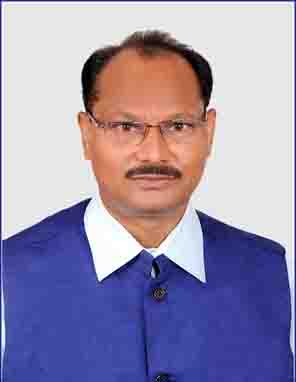
– Dr. T. Seva Kumar
State Vice President, Aam Aadmi Party, Andhra Pradesh