

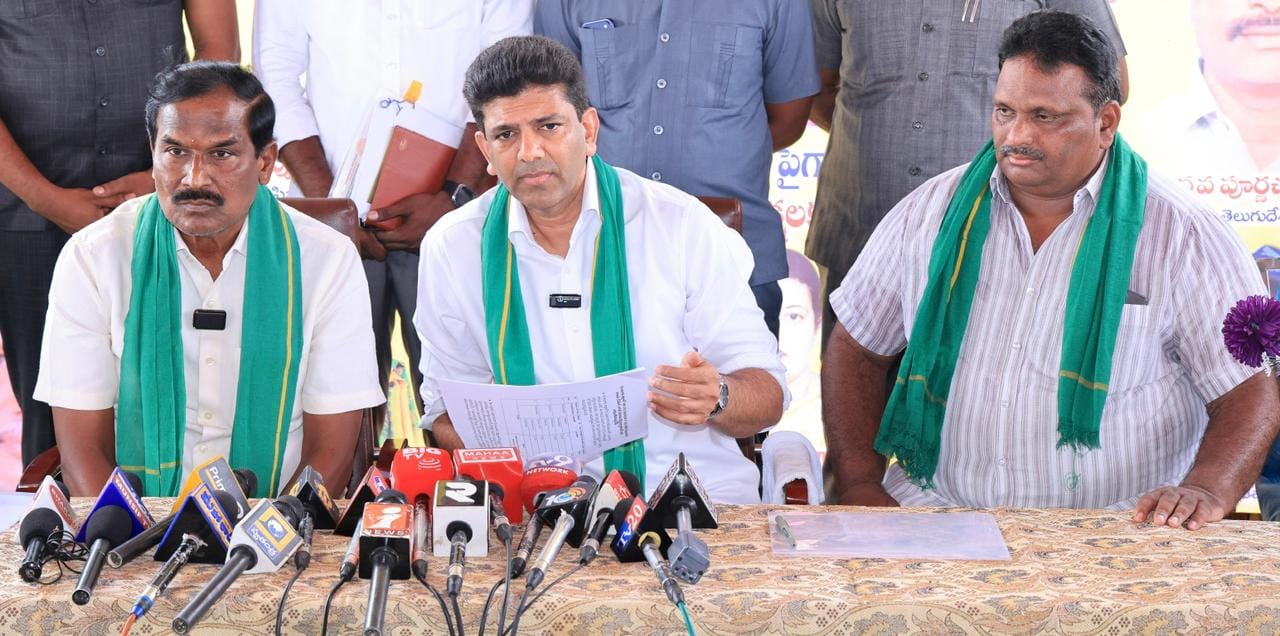
Guntur: A major irrigation boost is on the horizon for farmers in Andhra Pradesh as the state government has sanctioned ₹369.20 crore for the modernisation of the Guntur Canal. Union Minister of State Pemmasani Chandrasekhar, along with local MLA B. Ram Anjaneyulu, expressed gratitude to the government during a public meeting, calling the move a significant step toward strengthening agriculture in the region.
Also read https://goodmorningandhraonline.com/chandrababu-leadership-panchayat-unity/
Speaking at the event, Pemmasani Chandrasekhar highlighted the importance of farmers to the state’s economy and said the project reflects the government’s commitment to rural development. He noted that the canal upgrade is not just an infrastructure project but a lifeline for thousands of farmers who depend on consistent water supply.
The modernisation plan includes expanding the existing canal and constructing slope bunds to improve water flow. Unlike earlier proposals that considered concrete lining, officials opted for slope bunds after identifying potential issues with concrete beds in similar projects. This approach is expected to reduce seepage, improve efficiency, and ensure sustainable water management.
Currently, the canal irrigates around 27,000 acres. With the proposed expansion, this figure is set to rise dramatically to nearly 75,000 acres. This increase is expected to transform agricultural output in the region, giving farmers access to reliable irrigation and enabling them to grow more crops throughout the year.
Pemmasani also pointed out that the canal, built nearly six decades ago, has been struggling with multiple issues. These include poor slope design, water loss due to seepage, and excessive weed growth. As a result, even though the canal is designed to carry four TMC of water, it currently fails to deliver even 600 cusecs efficiently. The modernisation effort aims to address all these shortcomings through structural upgrades and reconstruction of around 280 related installations.
Also read https://goodmorningandhraonline.com/human-trafficking-prevention-andhra-pradesh-workshop/
He credited Chief Minister N. Chandrababu Naidu for recognising the challenges faced by farmers and supporting the project. According to him, the proposal was prepared after extensive ground-level assessment in coordination with local leaders and submitted to the state leadership for approval.
The project will also extend the canal by an additional 27 kilometers, ensuring water reaches tail-end regions that have long suffered from shortages. This expansion is expected to benefit not only agriculture but also drinking water supply in several villages.
In his remarks, MLA B. Ram Anjaneyulu said the project fulfills a key election promise made by the Telugu Desam Party. He recalled that the canal, originally constructed in 1972, had failed to serve its intended purpose due to incomplete development and maintenance issues. Although earlier efforts were made to initiate improvements, the work was halted after 2019, delaying benefits to farmers.
He added that renewed efforts, supported by central assistance secured through a resurvey initiative, helped revive the project. Once completed, the canal is expected to supply drinking water to nearly 50 villages, including those in Palnadu region.
Beyond irrigation, the project is likely to have a broader economic impact. Improved water availability can lead to higher crop yields, better incomes for farmers, and increased land value in surrounding areas. It may also encourage diversification into more profitable crops, strengthening the rural economy.
Pemmasani emphasised that the government is making substantial investments in agriculture, noting that nearly ₹450 crore is being spent in the parliamentary segment on farmer-focused initiatives alone. He thanked engineers, officials, and farmers who contributed to planning and advocating for the project.
The Guntur Canal modernisation stands as a crucial development for Andhra Pradesh’s agricultural sector. If implemented effectively, it could significantly improve water access, reduce long-standing inefficiencies, and provide a sustainable foundation for future growth in the region.